
Introduction
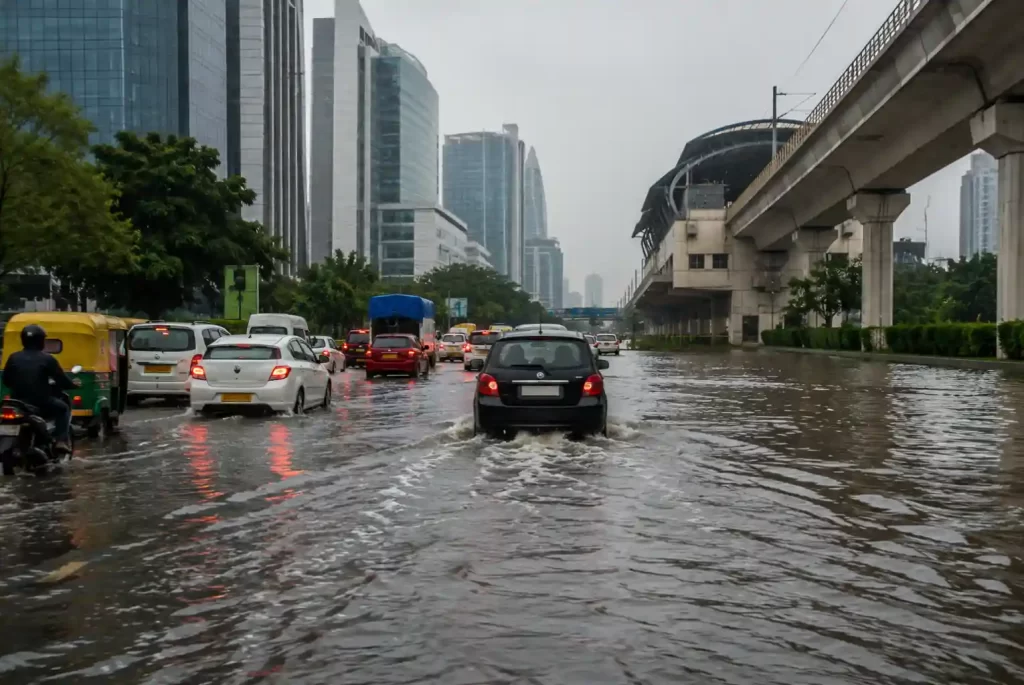
Gurgaon is one of India’s most developed cities. Glass towers, expressways, metro connectivity, and luxury housing define its skyline. Yet every monsoon season, the same city grinds to a halt. Roads turn into rivers, underpasses flood, vehicles stall, and office commuters spend hours trapped in gridlock.
Gurgaon waterlogging is not a new problem. It repeats with predictable consistency every year, regardless of smart city announcements or infrastructure budgets. Understanding why it happens, which areas suffer the most, and what residents can do about it is essential for anyone living, working, or investing in this city.
Why Gurgaon Faces Severe Waterlogging Every Monsoon
Gurgaon sits on a largely flat terrain with low natural gradient. Rainwater has fewer natural pathways to drain quickly. But geography alone is not the reason. The city’s rapid, often unplanned urbanization over the past two decades has made a manageable natural challenge into a recurring urban crisis.
The Gurgaon drainage system was designed for a much smaller city. When population density multiplied and construction accelerated, the infrastructure never scaled proportionally. New sectors and townships were approved and built faster than drainage capacity could be upgraded.
Major Causes Behind Recurring Flooding and Drainage Failure
1. Inadequate and Outdated Stormwater Drains
Most of Gurgaon’s stormwater drains are narrow, aging, and poorly maintained. They were not built to handle the volume of rainfall that dense urban surfaces now generate. During heavy rain, these drains overflow within hours.
2. Concretization and Loss of Permeable Land
Natural soil absorbs rainwater. Concrete does not. As open plots, green buffers, and wetlands were replaced by roads, parking lots, and buildings, the city lost its natural water absorption capacity. Reduced soil permeability directly increases surface runoff, overwhelming drains faster.
3. Construction Debris Blocking Drains
Gurgaon has been under continuous construction for over two decades. Silt, sand, and debris from construction sites routinely clog stormwater channels. Pre-monsoon drain cleaning is inconsistent across sectors, leaving blockages unaddressed when the rains arrive.
4. Missing Integration Between Old and New Infrastructure
Old Gurgaon sectors were developed under one set of norms. New sectors, developer-built townships, and government projects followed different standards. There is no unified, integrated stormwater management network connecting these zones. Isolated pockets drain into each other without coordination, causing backflow and flooding at junctions.
5. Encroachment on Natural Drains and Floodplains
The Badshahpur drain is Gurgaon’s primary natural drainage channel. Over the years, encroachments from both commercial and residential construction have severely reduced its width and carrying capacity. When it overflows, it floods large parts of South and Central Gurgaon.
Which Gurgaon Areas and Roads Are Most Affected During Heavy Rainfall
Some zones in Gurgaon flood almost every monsoon season. If you live, commute, or plan to invest in these areas, you need to understand the risk.
Flood-Prone Roads
- Rajiv Chowk and NH-48 service roads accumulate water rapidly due to heavy traffic loading and poor roadside drainage.
- Iffco Chowk underpass floods during moderate to heavy rain and regularly traps vehicles.
- Golf Course Extension Road experiences significant waterlogging at multiple low-lying points.
- Sohna Road near Rajiv Chowk and further south has consistent flooding issues where natural channels have been disrupted.
- Subhash Chowk and Hero Honda Chowk see severe traffic jams compounded by road flooding.
Most Affected Residential Sectors and Areas
- Sectors 12, 14, and 15 in Old Gurgaon have aging drainage infrastructure and see recurring basement flooding.
- Sectors 45, 47, and 50 near the Badshahpur drain basin are consistently among the worst-hit during heavy Gurgaon monsoon flooding.
- Sectors 56, 57, and 58 on Golf Course Extension Road face poor last-mile drainage connectivity.
- Palam Vihar and Udyog Vihar Phase 1 to 5 experience waterlogging that directly disrupts industrial and office operations.
- DLF Phase 1 to 5 varies in flood risk, with ground-level zones and basements near natural gradients being most vulnerable.
Impact of Waterlogging on Traffic, Businesses, and Daily Life
Waterlogged roads in Gurgaon cause traffic jams that can stretch for several kilometers. Commutes that normally take 20 minutes can extend to two hours or more. This directly affects productivity, punctuality, and business continuity.
Businesses in Udyog Vihar and Cyber City report disrupted supply chains, employee absenteeism, and logistics delays during heavy monsoon days. Ground-floor offices and retail outlets in flooded sectors face inventory and equipment damage.
For daily wage workers and delivery personnel who depend on two-wheelers, flooded roads present serious safety hazards. Engine damage from water ingestion is expensive and common.
Problems Faced by Residential Societies During Monsoon
High-rise societies have their own set of monsoon challenges that differ from road flooding but are equally disruptive.
- Basement parking floods in dozens of societies across Golf Course Road, Dwarka Expressway, and Sohna Road every monsoon.
- Sewage lines overflow when stormwater and sewage systems are not adequately separated, causing hygiene crises inside gated communities.
- Society maintenance teams are often unprepared with pumping equipment, causing delayed response and prolonged waterlogging in common areas.
- Societies built on low-lying land or near natural drain paths face the highest risk, regardless of the quality of internal construction.
Health, Hygiene, and Safety Concerns Caused by Stagnant Water
Stagnant water is not just an inconvenience. It is a public health risk.
Mosquito breeding in waterlogged areas accelerates the spread of dengue and malaria. Gurgaon consistently reports spikes in vector-borne disease cases during and after the monsoon season.
Sewage overflow mixing with stormwater creates contaminated pools on roads and in low-lying residential zones, raising the risk of leptospirosis and gastroenteritis. Children, elderly residents, and pedestrians are most vulnerable to injuries from open or submerged drains.
Infrastructure Gaps and Urban Planning Challenges in Gurgaon
The core problem is fragmented governance. GMDA (Gurugram Metropolitan Development Authority), MCG (Municipal Corporation of Gurugram), HRERA, private developers, and NHAI all operate in Gurgaon but their drainage responsibilities are neither clearly defined nor coordinated.
Roads built by NHAI drain into zones managed by MCG, which connect to channels maintained by GMDA. When flooding happens, accountability is unclear and fixes are delayed. Urban flooding in Gurgaon will continue as long as drainage is treated as a departmental boundary issue rather than a city-wide infrastructure priority.
Government Efforts and Drainage Improvement Projects
GMDA has undertaken desilting drives and widening of the Badshahpur drain in recent years. Several pump stations have been installed at key flood-prone underpasses. Smart sensor-based water level monitoring has been piloted at critical points on NH-48.
These are useful steps, but the scale is insufficient. The Badshahpur drain widening project has faced repeated delays due to land acquisition disputes. Many desilting drives happen only after floods occur rather than before the monsoon begins.
Tips for Commuters and Residents During Monsoon Season
- Avoid underpasses during or immediately after heavy rainfall. Water levels can rise faster than they appear.
- Do not drive through water if you cannot see the road surface. Most engine damage happens when water enters the intake at speed.
- Keep alternate route options identified before the monsoon starts. Apps like Google Maps and Waze update flooding alerts in real time.
- Carry basic emergency supplies in your vehicle: a torch, a tow rope, and a first aid kit.
- Monitor GMDA and MCG social media handles for flooding alerts during heavy rain events.
What Homebuyers Should Know Before Choosing a Gurgaon Locality
Flood-prone areas in Gurgaon directly affect property value, liveability, and long-term investment safety. Before buying or renting:
- Check whether the plot or building is in a natural drainage path or near the Badshahpur drain basin.
- Ask the developer or RWA for monsoon preparedness records, specifically basement pump capacity and historical flooding incidents.
- Visit the site during or shortly after a rain event before finalizing the purchase.
- Sectors along Dwarka Expressway in Sectors 81 to 95 are newer but still show drainage gaps due to ongoing construction.
- Golf Course Road and Golf Course Extension Road properties vary widely. Elevation of the specific plot matters more than the road name.
How Gurgaon Can Reduce Future Waterlogging Problems
Long-term solutions require structural change, not seasonal fixes. Gurgaon needs:
- Unified drainage governance under a single authority with clear accountability.
- Mandatory green buffer zones and permeable surfaces in all new construction approvals.
- Regular pre-monsoon drains audits with public reporting on completion status.
- Expansion of the Badshahpur drain to its original width with strict enforcement against encroachment.
- Integration of stormwater management into real estate approvals, making developers legally responsible for internal drainage compliance.
Final Thoughts on Gurgaon’s Monsoon Infrastructure Challenges
Gurgaon waterlogging is a systemic problem built over decades of rapid, under-regulated growth. It will not be solved by one drain-cleaning drive or one pump installation. The city needs coordinated investment, unified governance, and strict enforcement of drainage norms in new construction.
For residents and homebuyers, awareness is the first form of protection. Know your area, know your risks, and make decisions based on infrastructure reality rather than marketing promises. Gurgaon has the economic strength to solve this problem. What it needs is the institutional will to follow through.

