
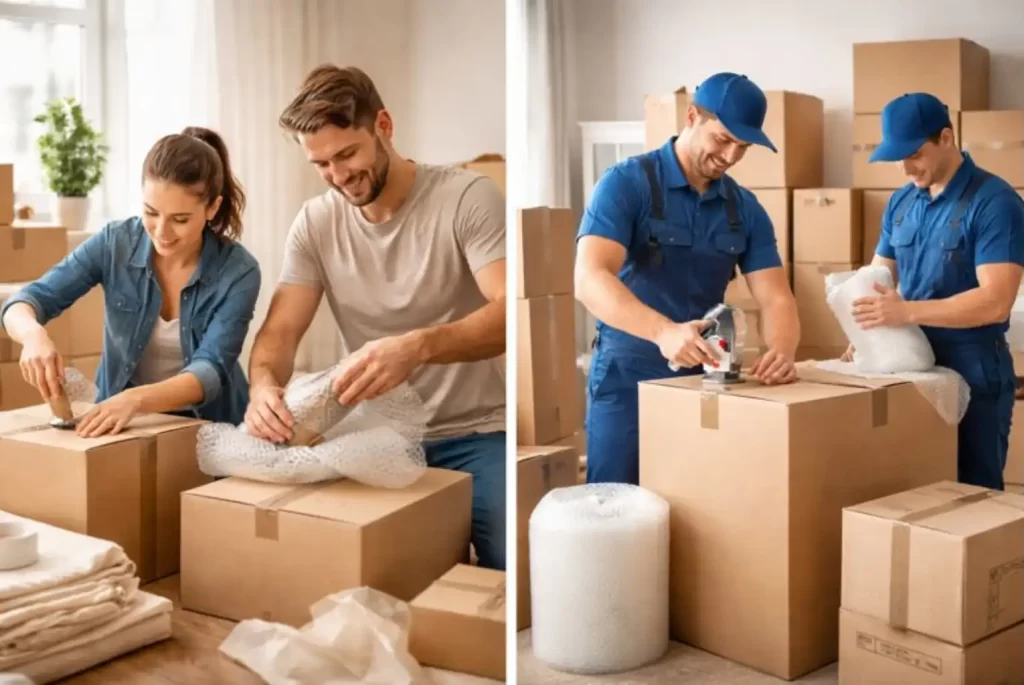
Introduction
When it’s time to put your belongings into storage, one of the biggest decisions you’ll face is whether to handle the packing yourself or hire professionals. This DIY packing for storage versus professional packing services debate isn’t just about cost—it’s about time, expertise, and peace of mind. Whether you’re downsizing, relocating, or simply decluttering, this comprehensive storage packing guide will help you make the right choice for your specific situation and budget.
Understanding Your Storage Packing Options
What DIY Packing for Storage Really Means
DIY packing involves personally handling every aspect of preparing your items for self-storage. This means sourcing your own packing materials, boxing up your belongings, wrapping fragile items, disassembling furniture if needed, and organizing everything for transport to your storage unit. Many people choose this route to maintain control over their possessions and save money on labor costs.
The DIY approach requires a significant time investment and physical effort. You’ll need to research proper packing techniques, purchase or find appropriate materials, and dedicate several days or even weeks to completing the job, depending on how much you’re storing. However, it offers complete autonomy over how your items are handled and organized.
What Professional Packing Services Include
Professional packers bring expertise, efficiency, and specialized materials to the job. When you hire professional packers, they typically arrive with all necessary supplies, from boxes and bubble wrap to specialty crates for artwork or mirrors. These experts know exactly how to protect different types of items, from electronics to glassware to antiques.
Full-service packing companies handle everything from wrapping individual items to labeling boxes systematically. Many also offer insurance options, providing additional protection for your belongings. The service can be customized—you might opt for full-service packing of your entire home or partial services where professionals handle only your most valuable or fragile items.
The Complete Cost Breakdown
DIY Packing Expenses: Hidden Costs to Consider
While DIY packing for storage seems like the budget-friendly option, the actual packing materials cost can add up quickly. Quality moving boxes range from $2 to $7 each, and you’ll likely need dozens. Bubble wrap, packing paper, tape, markers, and specialty items like wardrobe boxes or dish packs increase your storage supplies budget further.
A typical three-bedroom home might require $200-$400 in packing materials alone. Don’t forget hidden costs: renting or borrowing a truck, fuel, potential equipment rentals like dollies or furniture pads, and the value of your own time. If you need to take time off work to pack, factor in lost wages. Many people also underestimate the physical toll—you might need to budget for pain relief medication or even medical attention if injuries occur.
There’s also the risk factor. Without proper packing expertise, you might damage items, leading to replacement costs that far exceed what you’d have paid for professional help.
Professional Packing Services: What You’re Really Paying For
The cost of packing services varies widely based on your location, the volume of belongings, and service level. On average, expect to pay $300-$500 for a one-bedroom apartment, $500-$900 for a two-bedroom home, and $900-$1,800 for larger spaces. While this seems expensive compared to DIY, you’re paying for more than just labor.
Professional packing services include expertise that prevents damage, high-quality materials designed for long-term storage, insurance coverage, efficiency that saves days of your time, and physical labor that protects your body from strain. Many companies also offer liability coverage, meaning if something breaks during their packing process, they’re responsible.
When you calculate the true cost of packing services versus DIY, consider that professionals can typically pack in one day what might take you an entire week. For many people, especially those with demanding jobs or physical limitations, this time savings alone justifies the expense.
When DIY Packing for Storage Makes Sense
Ideal Scenarios for Self-Packing
If you’re on a tight budget and have plenty of time, DIY packing can be rewarding. It’s particularly suitable for college students, young professionals with minimal belongings, or anyone storing primarily non-fragile items like clothing, books, or linens. Save money packing yourself makes sense when you have a flexible schedule, physical capability, and willingness to learn proper techniques.
DIY is also ideal for those who are extremely particular about organization. If you have a specific system in mind or want to personally oversee every detail of how items are arranged, doing it yourself ensures everything meets your exact standards. Additionally, if you’re storing items gradually over several weeks rather than all at once, self-packing allows you to work at your own pace.
People downsizing from larger homes often enjoy the DIY process as it provides time to reminisce, make thoughtful decisions about what to keep, and maintain an emotional connection throughout the transition.
Items Perfect for DIY Packing
Certain belongings are straightforward to pack without professional help. Clothing, bedding, towels, and books are durable and require minimal expertise. If you’re primarily storing these easy items to pack, you can confidently handle the job yourself. Off-season sporting equipment, holiday decorations, and basic furniture pieces are also manageable for most people.
When you pack storage unit efficiently with these straightforward items, you can focus your energy on proper labeling and creating a logical layout that allows easy access to what you might need. Use clear bins for items you may want to retrieve, and maintain a detailed inventory list.
When to Hire Professional Packers
Situations That Call for Expert Help
Certain circumstances practically demand professional packing services. If you’re facing a tight deadline—perhaps a sudden job relocation or closing on a home sale—professionals can accomplish in hours what might take you days. Medical conditions, injuries, or age-related mobility issues make the physical demands of packing unrealistic for DIY.
Busy professionals who simply cannot spare multiple days from work often find that hiring experts is the practical choice. The cost of packing services becomes negligible compared to lost income or career opportunities. Similarly, if you’re managing the storage needs of an elderly parent or handling an estate, professional help removes tremendous burden during already stressful times.
Complex moving situations involving long-distance transport or international shipping absolutely require professional expertise to ensure items survive the journey and meet customs requirements where applicable.
Items That Need Professional Handling
Valuable artwork, antiques, musical instruments, and electronics benefit enormously from professional expertise. These specialty items often require custom crating, climate-controlled materials, or specific handling techniques that amateurs simply don’t possess. Fragile items storage demands more than just bubble wrap—professionals understand weight distribution, pressure points, and optimal packing methods.
Antique packing requires knowledge of different materials and finishes. What works for modern furniture might damage a 19th-century piece. Large mirrors, chandeliers, marble tabletops, and delicate china collections all justify professional handling. The replacement cost of these items far exceeds packing service fees.
Professional packers also have experience with awkwardly shaped items—grandfather clocks, exercise equipment, large electronics—that pose particular challenges for proper protection and space optimization.
Essential Storage Packing Tips for Both Approaches
Best Packing Materials for Long-Term Storage
Regardless of whether you DIY or hire professionals, using quality storage packing materials is crucial. Avoid used cardboard boxes that may harbor moisture, pests, or structural weakness. New, sturdy boxes designed for moving provide better protection. Plastic bins work well for clothing and items that need moisture protection but avoid them for anything that requires air circulation.
Climate-controlled storage packing is essential for items sensitive to temperature and humidity fluctuations. Use acid-free packing paper for photographs, documents, and textiles. Bubble wrap protects fragile items, but don’t let it touch delicate surfaces directly for extended periods as it can leave marks. Furniture covers, mattress bags, and appliance covers prevent dust accumulation and damage.
Invest in quality packing tape—cheap tape fails over time. Silica gel packets help control moisture, and cedar blocks deter pests naturally without harsh chemicals that might damage stored items.
Common Storage Packing Mistakes to Avoid
One of the biggest storage packing mistakes is overpacking boxes, making them too heavy to lift safely or causing bottom failure. Keep boxes under 50 pounds, and place heavier items in smaller boxes. Never pack boxes so full that they can’t close properly—this compromises structural integrity.
Failing to protect items in storage from moisture leads to mold, mildew, and rust. Don’t store anything damp, and ensure fabrics are completely clean before packing. Oil-based stains can set permanently during storage, and food residue attracts pests.
Disassembling furniture without labeling parts or keeping hardware organized creates headaches later. Place screws and bolts in labeled plastic bags taped to the corresponding furniture piece.
Labeling and Inventory Systems That Work
Proper labeling transforms chaotic storage into an organized storage unit. Label boxes on multiple sides with contents, room of origin, and handling instructions. Color-coding by room speeds up identification. Number each box and maintain a master list—a simple storage inventory management system on your phone or computer.
Photograph box contents before sealing for visual reference. This proves invaluable months later when you can’t remember exactly what “Kitchen – Misc” contains. Create a map of your storage unit showing where different boxes are located.
The Hybrid Approach: Getting the Best of Both Worlds
Many people find the optimal solution lies between the DIY vs professional movers extremes. Partial packing services allow you to handle straightforward items yourself while professionals tackle challenging belongings. This approach offers significant cost savings while ensuring your most valuable or fragile items receive expert care.
You might pack clothing, books, and basic household items yourself over several weeks, then hire professionals for a single day to handle your artwork, antiques, and complex furniture disassembly. This hybrid method also works well when you want to maintain involvement in the process but need help with physically demanding aspects.
Some companies offer consulting services where professionals provide guidance, materials, and techniques while you do the actual packing. This educational approach builds your skills while ensuring proper methods.
Conclusion: Making the Right Choice for Your Storage Needs
Choosing between DIY and professional packing for storage ultimately depends on your specific circumstances—budget, timeline, physical capability, and the nature of what you’re storing. By honestly assessing these factors and understanding the true costs and benefits of each approach, you can make a decision that protects your belongings while meeting your practical needs. Whether you pack everything yourself, hire full-service professionals, or blend both approaches, proper planning and quality materials ensure your items remain safe throughout their storage stay.

